

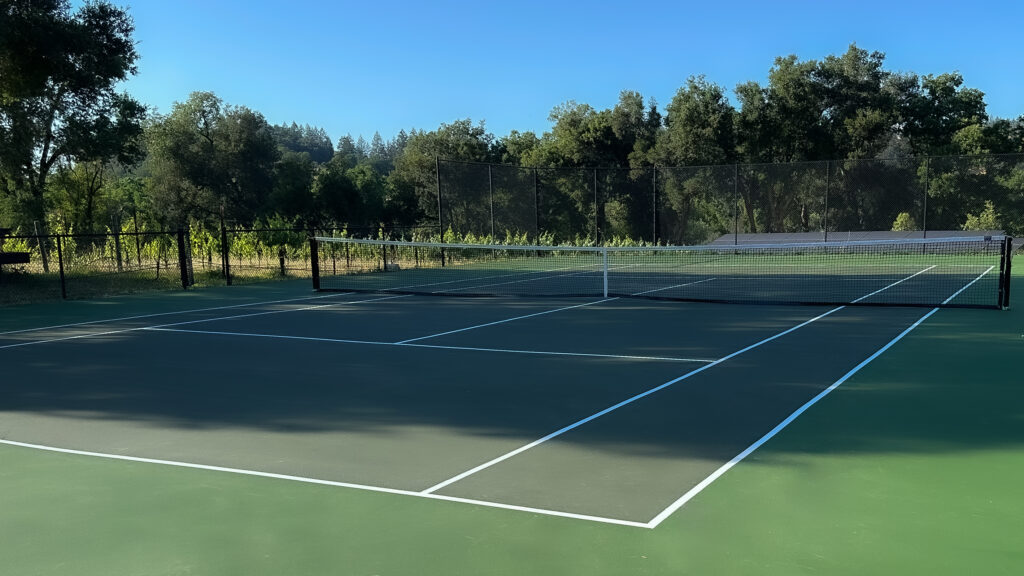

BAY AREA
TENNIS COURT
RESURFACING
BAY AREA TENNIS COURT RESURFACING
CONTEMPORARY COURTS
MODERN METHODS
CONTEMPORARY COURTS
MODERN METHODS

WHY BAY AREA CUSTOMERS CHOOSE US FOR
TENNIS COURT RESURFACING

Member of the American Sports Builders Association (ASBA), the national authority for court construction and surfacing.
- Precision Craftsmanship - Courts built to ASBA recommended specifications.
- Direct Access - Work directly with the owner from start to finish. No handoffs to sales reps or project managers.
- Premium Acrylic System - Tournament grade coatings applied at proper mix ratios and no over-dilution for rich colors and sharp lines.
- Trained, In-House Technicians - All resurfacing performed by our own team, ensuring consistency, accountability, and craftsmanship at every step.
- Licensed General Contractor - bonded, insured, and able to handle complete sports construction and surfacing.
- Clean, Transparent Process - Clear communication, clean job sites, and meticulous execution with no shortcuts.
- Independent - Not a Franchise - Bay Area based, locally owned and focused solely on high performance sports surfaces.

TRUSTED AND RECOGNIZED


Best of Houzz – Three Years in a Row
Featured in the San Francisco Chronicle

TENNIS COURT RESURFACING
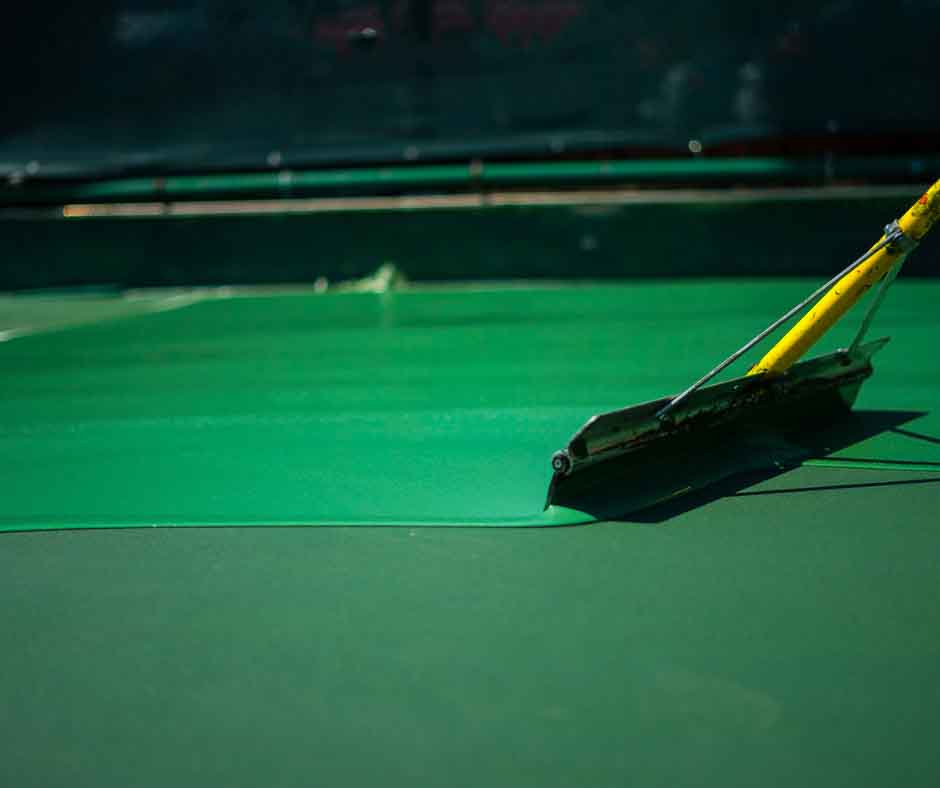
Tennis court resurfacing is needed after a number of years. For tennis courts which see frequent use, resurfacing is needed every 4-5 years. Another common project is for tennis courts to be resurfaced and to have additional court lines added.
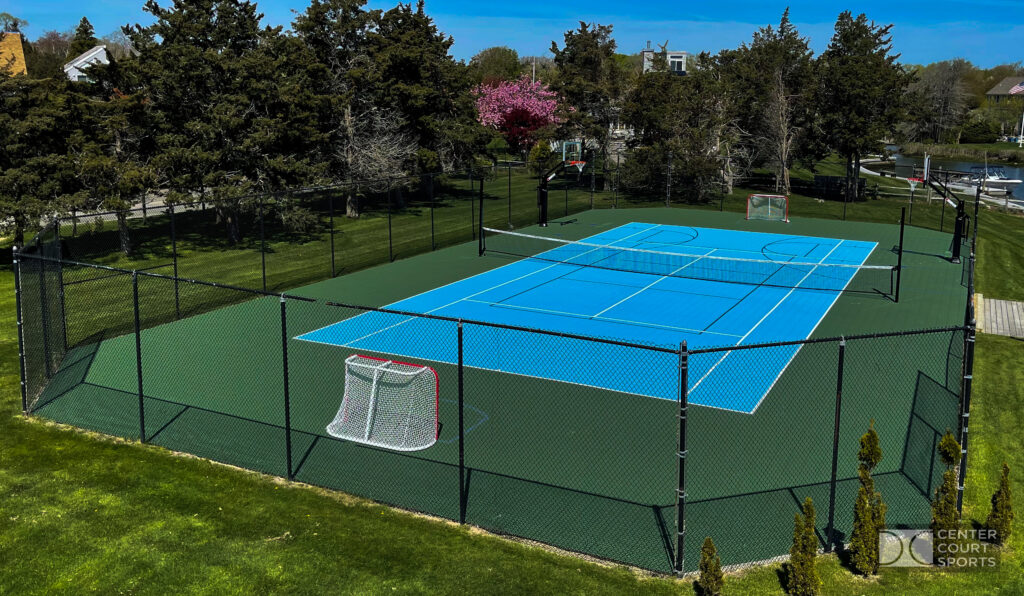
For commercial tennis courts, four pickleball courts and one full court basketball court line can be added. For backyard tennis courts, customers commonly add one or two pickleball and half court or full court basketball court lines.
To further enhance your tennis court, you may want to replace your worn out tennis net posts and tennis net. As your local tennis court painting company, we will guide you through all the available options when choosing to refresh your tennis court surfacing.
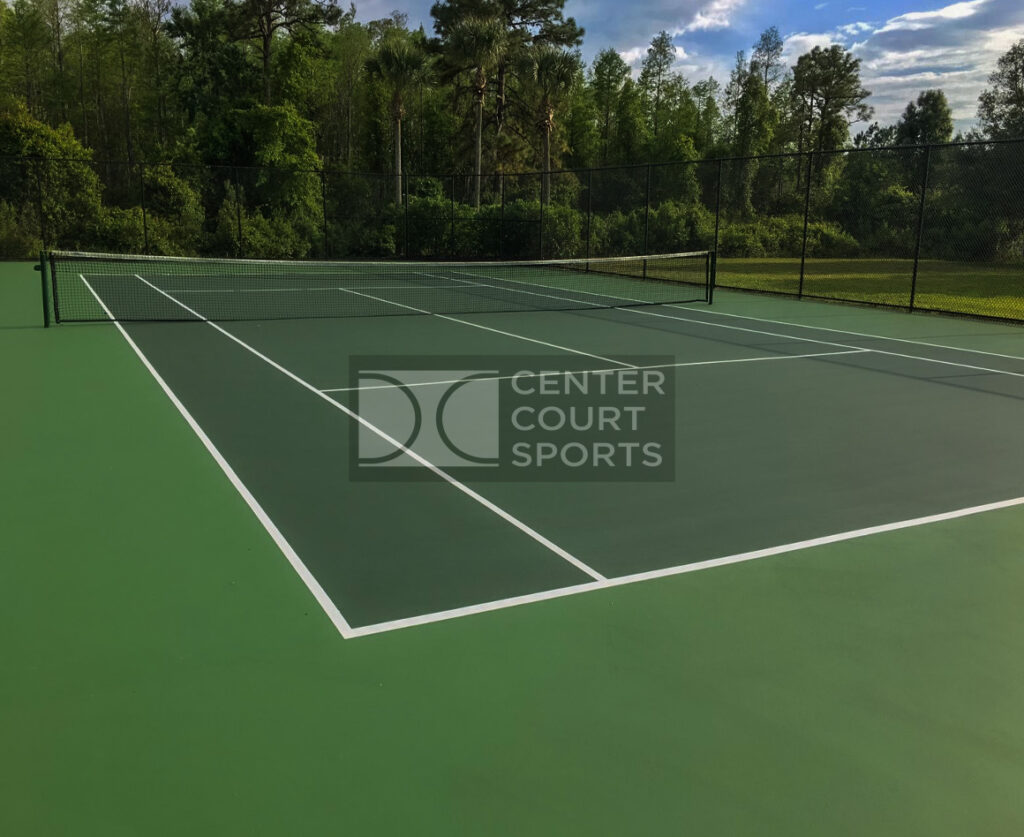
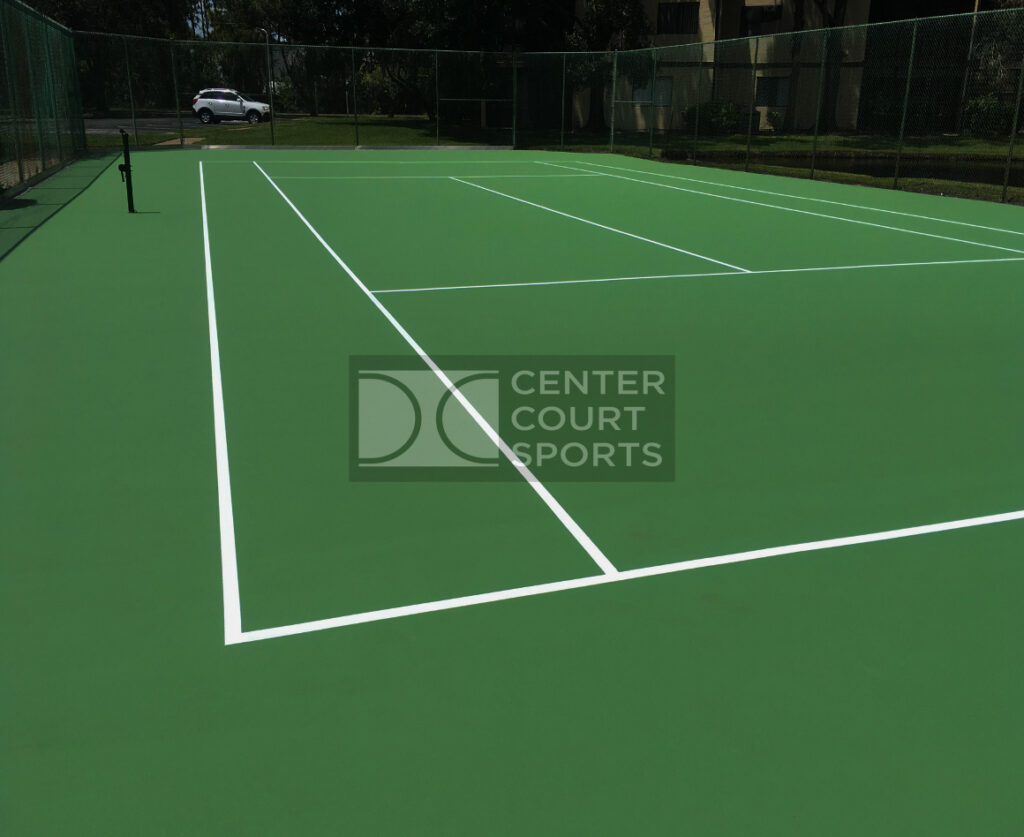
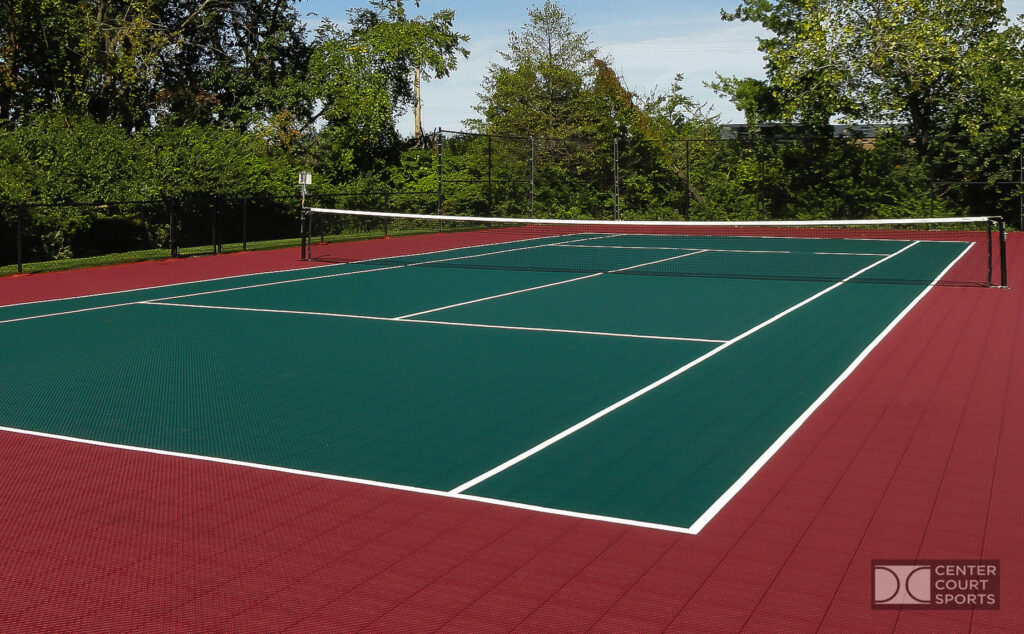
TENNIS COURT RESURFACING GALLERY

UNDERSTANDING TENNIS COURT CRACKS
- Hairline cracks – these are cracks which have minimal to no separation between each side of the crack. These cracks are repaired by cleaning them out, and then filling them in with an elastomeric caulk.
- Wide cracks – these are cracks which have some separation between each side of the crack. Depending on the severity of the crack, we will either use a cement court patch binder mixture, or an elastomeric fiber reinforced caulk.
- Fault cracks – these are cracks in which one side is higher than the other. These are the most difficult cracks to repair and usually indicates severe settling problems underneath the court.
- Tennis net post cracks – these cracks occur because of differential settling. The concrete footing of your tennis net posts are more stable than the asphalt surrounding it. When the asphalt settles over time around the net posts, it causes cracks to appear where the concrete footing meets the asphalt.
- Settling – this usually happens at the edges of the tennis court. Minor settling at the corners is repairable, but settling over a large area may require a court rebuild.
- Bubbling – this can happen due to concrete footings not curing long enough, or if the court paint or primer does not dry fully before the next application, or if water gets under a court.
- Low spots/high spots – these can occur over time, or as a result of defective construction.
- Tree root heaving – a common problem which requires the court surface to be cut away, the roots removed, and the base rebuilt and surfaced.
- Delamination – this occurs when the surfacing peels away from the base. This usually happens on older courts which have not been maintained properly.
- Rust spots – Asphalt (especially recycled asphalt) can contain iron pyrites. This can lead to rust spots in the asphalt which will bleed through and stain the tennis court surfacing above.
TENNIS COURT REPAIR
- There are three basic approaches to tennis court repair and resurfacing.
- The first approach is to simply repair and resurface. This is the lowest cost method, but is not recommended as cracks will likely open again.
- The second approach is a partial overlay. We install an overlay just over the cracks, then resurface over the overlay. The overlay (also called a slipsheet) covers the cracks which allows the cracks to widen while still maintaining the surfacing above the crack. This costs more, but reduces the risk of cracks opening up again, but does not prevent new cracks from opening up in other areas not protected by the overlay.
- The third approach is a complete court overlay. We recommend a complete overlay if the total linear feet of cracks exceeds 500 linear feet, or if the cracks are less than 500 linear feet but quite severe. A complete overlay covers the entire court. This is the most costly approach, but also tends to have the best results as the overlay protects against cracks from opening up again anywhere on the court.

TENNIS COURT OVERLAY
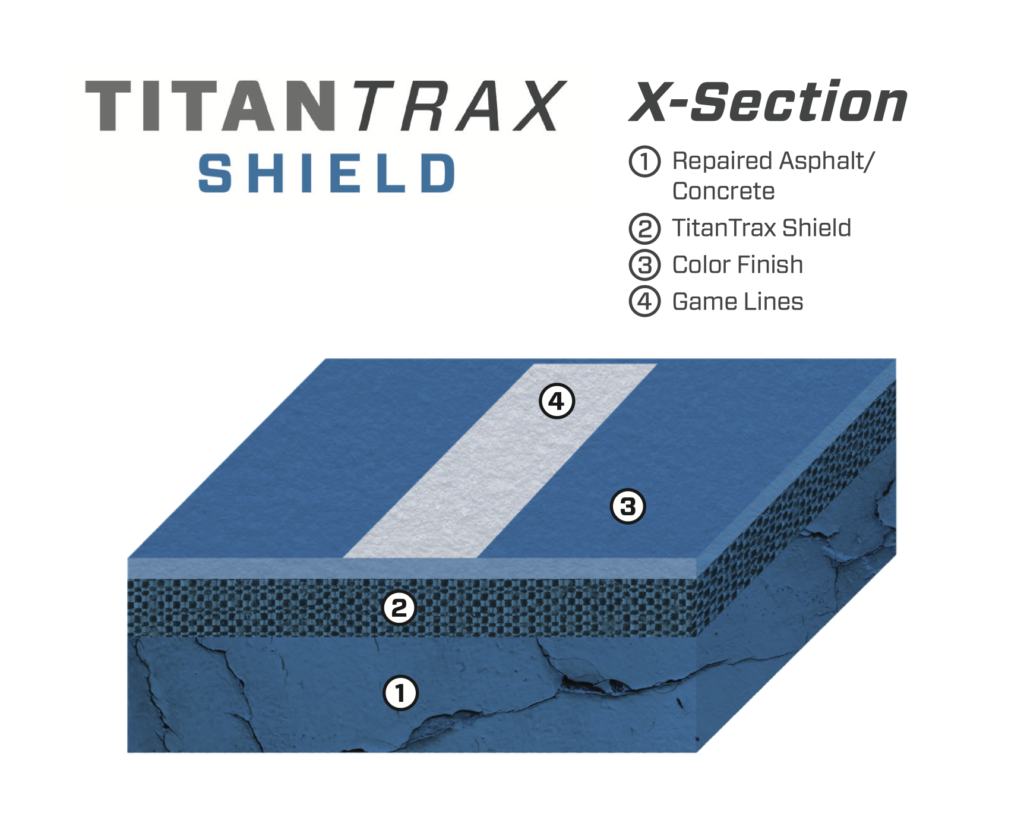
An overlay can either be a partial overlay, or a complete overlay. If you have more than about 500 linear feet of cracks, it may make more sense to do a complete overlay rather than a partial overlay. Partial overlays are priced per linear foot, and at a certain point it makes more sense to cover the entire court rather than just the cracks.
A partial overlay is adhered to both sides of the crack, with no adhesion directly over the crack. This allows the crack to widen under the overlay without affecting the court surfacing above it. Partial overlays tend to cost less than a complete overlay because it just covers the repaired areas, and not the entire court. However, it does not protect against cracks opening up in new areas.
A complete overlay is a reinforcing material which covers the entire court. They are 12′ wide sheets which are installed the length of the court, until the entire court is covered. Both repaired and unrepaired areas are covered. Covering the unrepaired areas prevents new cracks from forming. Complete overlays are a significant investment, but it is often worthwhile insurance against potential new cracks, especially on older courts which are in poor condition.
COST TO RESURFACE TENNIS COURT
- As tennis court construction methods vary, each tennis court is unique. However, here are some things to consider for your project.
- Repairs. How many cracks does your court have, and how severe are they? Hairline cracks are easy to repair. As cracks get wider, it becomes more difficult to repair them. Does your court have high and low areas in which water tends to pool? If so, do you want them repaired? Some customers are okay with having the high and low spots, especially if they are in the out of bounds areas. Other customers want as close to perfectly flat as you can get, and so the cost to resurface the tennis court will be higher.
- Net posts and net. Do you like your existing net post and net? Modern tennis nets are secured at each end with a loop or screw. Older tennis nets are often secured with a knot hidden inside the net post. So it may not be possible to just replace the net with your existing net post. If you would like to replace your net posts, that needs to be done before surfacing as a large area will have the removed around each net post in order to break the concrete footings. Your center anchor may also need to be replaced. In many cases the anchor is broken or rusted and brittle, and likely to break.
- Court lines. Are you looking to add other court lines such as pickleball and basketball? There are many options when it comes to adding pickleball nets to a court. Obviously the basketball hoop will have to be installed as well. We can do a court drawing so you can see what the lines will look like. Court lines are very time consuming to mask and paint, and so the more lines, the higher the cost to resurface your tennis court.
- Color choices. Two colors is most common. One color takes less time to surface than two colors. Three or more colors takes the most time. Custom logos require a special type of custom single use stencil. The plastic ones won’t work!
- Access. Court paints are delivered in heavy 5 gallon, 30 gallon, and 55 gallon drums. How easy is it to move materials to the court area? Does the court have access to nearby electrical and water?
- Location. Depending on your location, the cost to resurface your tennis court may be higher due to travel time and lodging.
- Fencing. We do not do fence repair, but we can remove an old fence and install a new one.
TENNIS COURT DIMENSIONS
The suggested court size for your tennis court will depend on the space available,
court usage, potential obstructions, and many other factors.
Every tennis court we build is unique. However, here are some general guidelines.
The suggested court size for your tennis court will depend on the space available, court usage, potential obstructions, and many other factors.
Every tennis court we build is unique. However, here are some general guidelines.

Tennis court dimensions
(USTA recommended)
60’W x 120’L (residential)
80’W x 140’L (tournament/competitive)
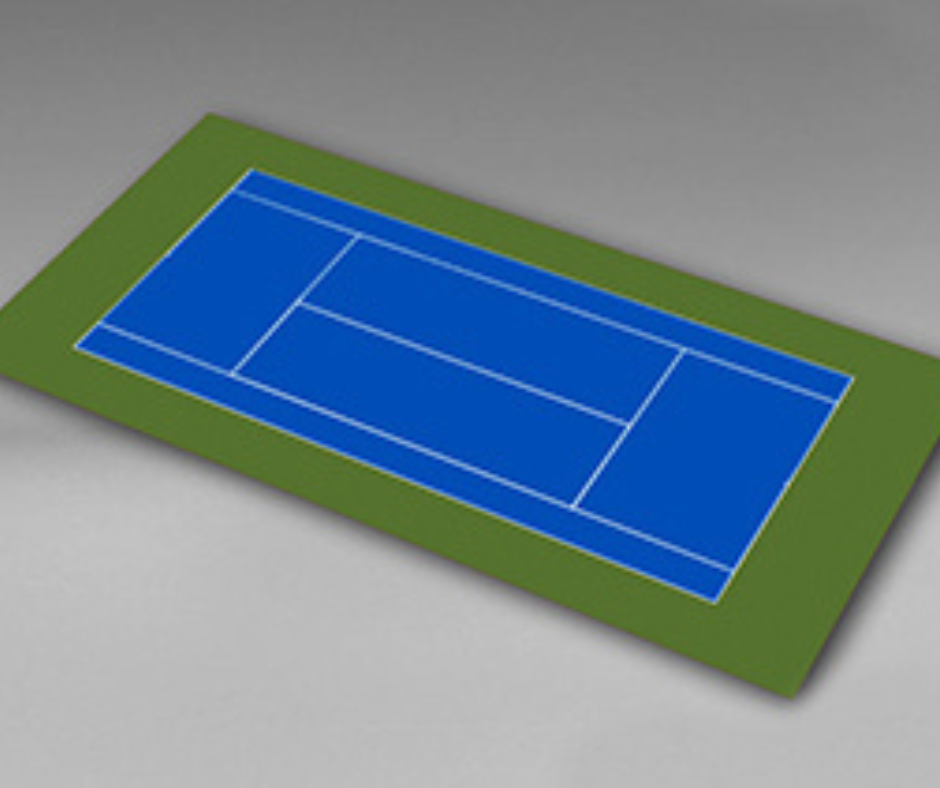
Tennis court dimensions
(Reduced, USTA recommended)
56’W x 114’L
TENNIS COURT RESURFACING FAQ
While there are some similarities, the materials used as well as the application process are quite different. When you are painting a wall or ceiling, you are starting off with a perfectly flat surface. A tennis court however usually has cracks, high spots and low spots which need to be repaired before any paints are applied. If the tennis court is damaged enough, crack mitigations measures such as a court overlay may need to be installed. Next, the entire court must be cleaned thoroughly. Finally, multiple coats of acrylic resurfacer and court colors are applied. Most courts have three total coats, but if the court needs a lot of repairs, as many as five coats may be necessary. The various layers and repairs are applied with specialized tools. Tennis court resurfacing is lot more complicated than most people think!
Acrylic resurfacer is the base coat which is applied after the repairs have been made. It is black in color, and after mixing has a large amount of coarse sand. This allows the resurfacer to fill in low spots around the court. After the resurfacer is applied, then the color coats are applied, usually with finer sand for a smoother playing surface.
We use a water based acrylic paint. However, this is very different than the paint you would use for your house. This paint is formulated specifically for outdoor courts, and holds a large amount of fine sand to give the court texture. The paint also has additives such as binders which help suspend the sand evenly in the paint after mixing. This paint is also formulated to adhere well to concrete or asphalt.
This is very subjective, and is different for all customers. It depends on how much use the court gets, how well it is maintained, and the weather. For higher usage or commercial courts, resurfacing every 3-5 years keeps the colors looking fresh and minimizes future maintenance problems. For lower usage courts, you can resurface every 5-7 years, but court may start to look a bit worn, and it may lead to more maintenance problems. If you are not sure, reach out to us today and send us some photos! We would be happy to send you a tennis court resurfacing quote
